
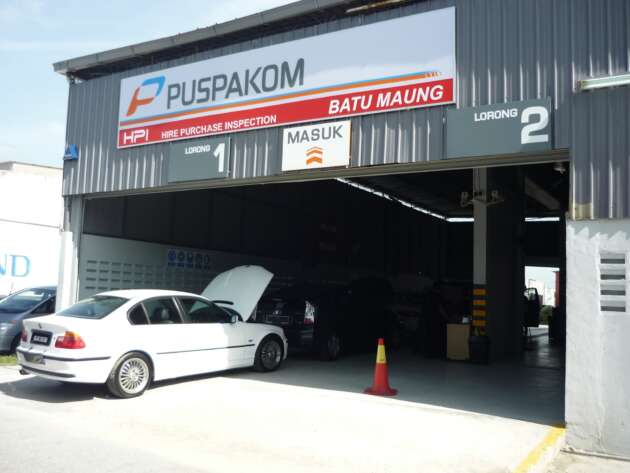
If you’ve ever bought a used car, sold one, settled a hire purchase loan, or driven anything with a commercial plate, chances are you’ve crossed paths with PUSPAKOM — or you’re about to. And if you’re like most Malaysians, you probably booked the inspection, turned up, paid, and walked away with a report without ever really understanding which inspection you did or why.
That’s understandable, because PUSPAKOM’s inspection menu is a bit of an alphabet soup. B5, B7, B2, B6, “Berkala,” “Khas,” IVIC, VVI — the codes get thrown around interchangeably by salesmen, runners and forum uncles, and half the time even they get it wrong. So let’s clear it all up in one place.
Here’s the full rundown of what PUSPAKOM actually does, when each inspection applies, how much it costs, and what the examiners are looking at when they drive your car into the lane.
First, what exactly is PUSPAKOM?
Pusat Pemeriksaan Kenderaan Berkomputer — PUSPAKOM for short — is Malaysia’s first and, for the most part, only nationwide computerised vehicle inspection company. It was incorporated in 1994 and is a wholly-owned subsidiary of DRB-HICOM. The Malaysian government appointed it to carry out all mandatory inspections for both commercial and private vehicles, under the authority of the Ministry of Transport and JPJ, anchored in the Road Transport Act 1987.
The scale is enormous: PUSPAKOM performs millions of inspections every year across its network of branches nationwide, plus mobile units that bring the inspection lane to you. Its job, in plain terms, is to confirm that a vehicle is genuine (not cut-and-joined or with tampered identity), roadworthy, and compliant with safety and emissions rules.
Now, to the inspections themselves.
B5 / MV15 — Transfer of Ownership Inspection
This is the one most ordinary drivers will encounter, because it’s tied to buying and selling used cars.
When you need it: Any time a private vehicle changes ownership and needs to be re-registered at JPJ. If you’re selling your car or buying someone else’s, a B5 report is required before JPJ will process the transfer. Motorcycles are exempt.
What it costs: RM30. It’s one of the cheapest inspections on the list.
What it checks: The core focus is identity and basic roadworthiness — verifying the registration, chassis and engine numbers against the documents to make sure the car is genuine and hasn’t been tampered with, alongside checks on bodywork condition, window tint (visible light transmittance), lights and the like. Failing on tint is surprisingly common, so peel off anything that pushes your front windscreen and front windows past JPJ limits before you go.
Worth noting: As of mid-2025, the Ministry of Transport began appointing alternative inspection centres to carry out MV15 (the new name for B5) Ownership Transfer inspections — such as Carro — specifically to ease the congestion at PUSPAKOM branches. So for a straightforward ownership transfer, you may now have options beyond PUSPAKOM itself.
B7 — Hire Purchase Inspection (HPI)
B7 is essentially the B5’s more thorough, more expensive sibling.
When you need it: When a used-car purchase involves bank financing. If the buyer is taking a hire purchase loan, the bank will require a B7 inspection before approving the loan.
What it costs: RM60 — double the B5, which reflects the more comprehensive nature of the check.
What it checks: Everything a B5 covers and then more, with a deeper look at the vehicle’s identity and key safety and structural items, because a financier needs confidence that the asset backing the loan is genuine and sound. Introduced in 2011, it was designed to protect buyers from ending up with illegal or unroadworthy vehicles.
A common scenario: Buying a used car with a loan often means doing B5 and B7 together — budget around RM90 in actual inspection fees.
This is the catch with those new B5/MV15 alternative centres — if your buyer needs a loan, you’ll still need PUSPAKOM for the B7, because B7 falls under the Hire Purchase Act 1967 rather than purely under the Ministry of Transport. So you might as well do both B5 and B7 at PUSPAKOM, for now, until the alternative centres can do B7 as well.
B2 / Berkala — Periodic (Routine) Inspection
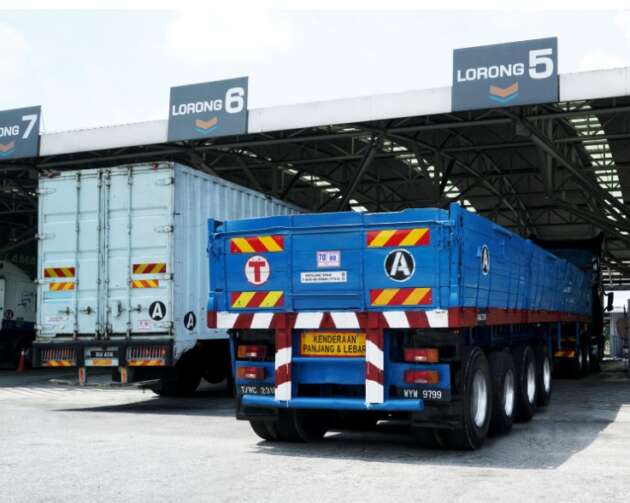
“B2” and “Berkala” are the same thing. “Berkala” simply means “periodic” in Malay, and B2 is PUSPAKOM’s code for the periodic/routine inspection. So when you hear B2, Berkala, periodic, or routine inspection, they all point to the same mandatory commercial-vehicle check.
When you need it: Commercial vehicles must undergo this routinely. Under the Road Transport Act 1987, most commercial vehicles — taxis, rental cars, limousine taxis, buses, minibuses, vans, lorries and the like — are required to be inspected every six months.
What it costs: RM50 per periodic inspection.
What it checks: This is the comprehensive roadworthiness battery. PUSPAKOM examines vehicle identity (registration, chassis and engine numbers), upper bodywork, window light transmittance, exhaust emissions, front wheel alignment, headlamp beam condition, suspension performance, brake performance (efficiency and imbalance), speedometer accuracy, and the condition of the undercarriage.
Take note — it’s getting stricter: Following JPJ directives, PUSPAKOM has been tightening the Berkala procedure in stages. From 1 September 2025, tougher rules kicked in across four areas — full brake system efficiency testing, trailer brake tests on all axles, tyres and visual inspection.
From 1 October 2025, two further tests were added: a tyre under-inflation (minimum air pressure) check and a brake drag-force limit of 10% per axle. And from 12 January 2026, a revised brake protocol for lorries began failing heavy vehicles with brakes that are either excessively tight or excessively loose.
If you run commercial vehicles, your old “should pass lah” assumptions may no longer hold.
E-hailing inspection (a special case of Berkala)
If you drive for Grab, Bolt or any e-hailing platform, your inspection lives under the periodic framework — but with its own rules.
When you need it: Once your car hits three years of age. Cars younger than three years are generally exempt at onboarding. When the vehicle reaches three years old, it requires inspection, and thereafter an annual (every 12 months) periodic check to stay certified for e-hailing — as required by the Ministry of Transport via JPJ/APAD.
There’s a one-time “Berkala Pertama” (first periodic) for registration purposes for vehicles that have already passed the three-year mark, and a “Berkala Semula” (re-inspection) if you fail.
What it checks: The same roadworthiness items as the standard periodic inspection — brakes, emissions, lights, suspension, identity and so on.
Note: It’s annual for e-hailing, versus six-monthly for taxis and most other commercial vehicles.
B6 / IVIC — Imported Vehicle Inspection for Customs
The one most people never see, because it happens at the ports.
When you need it: When a vehicle is imported into Malaysia. PUSPAKOM deploys inspection units at the major ports to inspect imported vehicles on arrival, on behalf of the Royal Malaysian Customs.
The IVIC (also called B6) covers all categories of imported vehicles — new, used and reconditioned — and is carried out at entry points such as Northport and Westport in Port Klang, Kota Kinabalu Port in Sabah and Kuching Port in Sarawak. Importers and agents can request a B2 inspection alongside the B6 if needed.
What it checks: Verification and documentation of the imported vehicle to satisfy Customs requirements before the vehicle can proceed toward registration with JPJ.
Special Inspection (“Khas”)
The catch-all for vehicles that fall outside the normal flow.
When you need it: Several situations trigger this. The big ones are: a vehicle whose road tax has lapsed for more than three years and needs reinstatement; vehicles that have undergone significant modification — change of engine, chassis or body specification, or a laden-weight upgrade; rebuilt or accident-damaged vehicles; and cases where JPJ specifically requests identity verification.
Insurance write-offs fall here too — vehicles declared Beyond Economic Repair (BER) by insurers must be inspected after repair work is completed (coded B2(85)) to confirm they meet legal and roadworthy standards.
What it costs: Variable, typically in the RM30–RM90 range depending on the vehicle and the type of special inspection.
What it checks: Depends entirely on the trigger — but expect a thorough confirmation of the vehicle’s physical condition and identity, especially after modifications or damage, to ensure nothing dodgy has happened to the car since it was last legitimate on the road.
Voluntary Inspection (VVI)
The only one nobody forces you to do — and arguably the most underused.
When you need it: Never, technically. It’s optional. But it’s a smart move before a long balik kampung drive, before buying a used car you’re unsure about, or before selling so you know what a buyer’s inspection will flag. Think of it as a health check you choose to do rather than one the law demands.
What it costs: Around RM50.
What it checks: A standard safety and roadworthiness evaluation — brakes, suspension, lights, emissions and the general mechanical condition — giving you a neutral, computerised second opinion on the car’s state.
Mobile and door-to-door inspections
For those who can’t easily get to a branch, PUSPAKOM runs Mobile Inspection Units — a Mobile Truck for heavy commercial vehicles, a Light Mobile for light commercial vehicles, and a Mobile Van for private cars — bringing the inspection to your chosen time and place.
The convenience isn’t free: a home inspection adds a service fee on top of the standard inspection fee (figure on roughly RM100 service fee plus the inspection charge per vehicle). PUSPAKOM adjusted its Mobile Van and Mobile Truck Service rates from 1 April 2025, while stressing that branch inspection fees stayed unchanged. Do note the mobile service is only available in Peninsular Malaysia.
How to book a PUSPAKOM inspection?
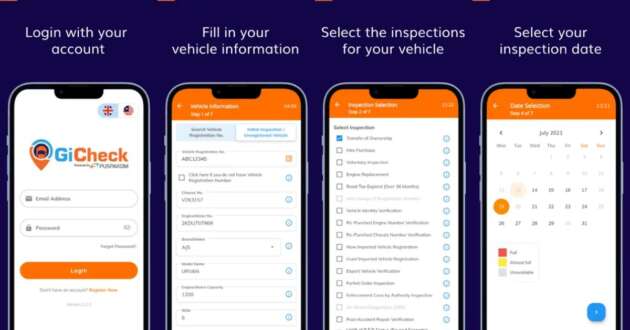
Practically everything now runs through online booking via Puspakom’s GiCheck portal.
For most private owners, life with PUSPAKOM begins and ends with the RM30 B5 when you sell, plus a B7 if your buyer takes a loan.
If you run anything commercial — or you drive e-hailing — the Berkala is your recurring appointment, and it’s one the authorities are actively making harder to pass. Either way, the actual government fees are modest; the real cost is usually the time, and the temptation to overpay a runner to skip the queue.
Looking to sell your car? Sell it with Carro.





