
Perak industry and investment committee chairman Loh Sze Yee has said that the federal government of Malaysia needs to re-evaluate the conditions for electric vehicle companies planning to set up factories in the nation, reported The Star.
This follows a prior report by The Edge that the ministry of investment, trade and industry (MITI) had imposed terms on BYD for its local assembly (CKD) plans that the Chinese manufacturer could not agree to. Thereafter, MITI issued a statement in response.
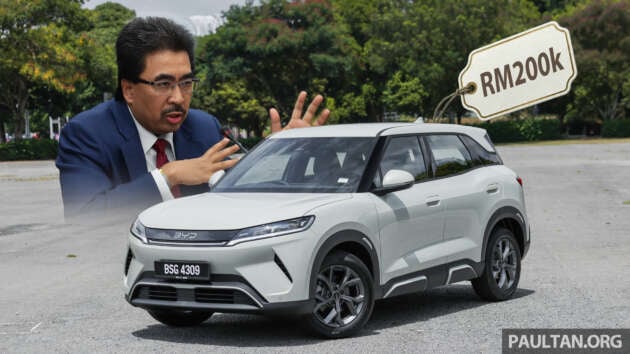
Amid claims that the Malaysian federal government imposed unfavourable conditions for BYD, minister of investment, trade and industry Datuk Seri Johari Abdul Ghani denied the matter, saying that new automotive investment conditions were non-discriminatory and applicable equally to all high-volume automotive assembly projects, the report by The Star wrote.
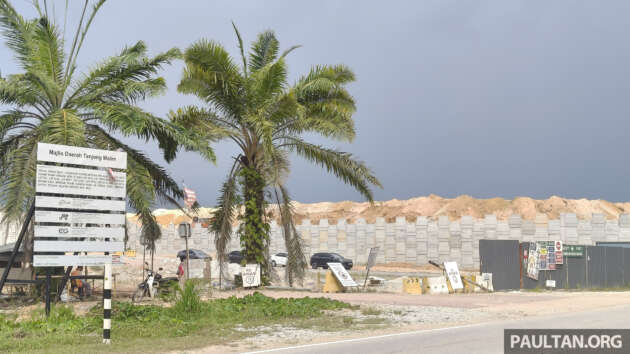
With regard to concerns that plans by BYD to invest in a local assembly plant in Tanjong Malim may be jeopardised, Loh said that stringent conditions need to be reassessed based on overall benefits and long-term national interests.
“The Investment, Trade and Industry Ministry’s industrial protection policy requires locally assembled BYD vehicles to adhere to an 80:20 export-to-domestic sales ratio,” Loh said.
“In addition, an initial 40% localisation requirement entails sourcing components locally has been set in order to safeguard the local automotive industry. As a result of these stringent conditions, BYD’s plan to establish a CKD assembly plant in Tanjung Malim is now facing significant uncertainty,” he continued.
The state’s industry and investment committee chairman continued to say that it was regrettable that the ministry introduced a new policy framework after BYD had submitted its application to invest in Perak, stating that the policy was “introduced in a sudden manner, lacking transparency and institutional consultation,” and in doing so, has “severely disrupted existing plans and undermined trust among stakeholders,” he said.
“The state government must make it clear that this development has had a significant and tangible impact on the project. It not only weakens investor confidence but may also have long-term implications for Malaysia’s overall business environment,” Loh continued.
The state of Perak would continue to pursue constructive engagement and mediation within the available timeframe, he said, adding that the relevant authorities must provide a clear, transparent and convincing explanation for these policy changes to safeguard policy stability and Malaysia’s investment credibility.
The Perak state government also firmly reiterated its position that any form of BYD’s production presence in Malaysia must remain in Perak, in line with existing agreements and development commitments, while fully respecting the state’s development rights, Loh said.
“The project must not be relocated to any other state. BYD representatives conducted site visits in Malaysia early last year, with four other states also competing for the investment. Following evaluations, BYD identified a strategic site near the KL-Kepong High-Tech Park in Tanjung Malim as their preferred location,” he said.
Looking to sell your car? Sell it with Carro.



Foreign investment only makes sense if there’s real local value—jobs, supply chain participation, and technology transfer. If most inputs, labour, and expertise are imported while environmental costs are borne locally, then the net benefit becomes highly questionable.
There are already enough precedents where the host country bears the environmental and social cost while most of the economic value leaks out. Unless there are enforceable requirements on local participation and accountability, this risks becoming another example of the same pattern.
Supply chain argument never made sense w.r.t Malaysia. The only thing Malaysia can make is the chassis. The EV powertrain is R&D intensive no one is going to share those secrets with any foreign nation like Malaysia. It’s beyond dumb to expect local supply chain doing anything meaningful here. That leaves the chassis and the tyres, *yawn* that’s like saying Malaysia can cut the veggies for the burger but said veggies come from elsewhere anyway. Oh wait isn’t that what garbage brands like Perodua and Proton do anyway? These two don’t make the powertrain, they only make the chassis and some wear n tear parts like the interior. MITI are dumbos, they think duplicating P1/P2 in the form of Chinese CKDs is going make jobs for local companies. Delusional.
The customer doesn’t care if the car is made by PMX’s own hands or some dude in China or Europe or Korea. It’s the price that matters. Whatever helps price come down is what matters to the buyer, that means competition, which also means no more crony protections for losers like P2 and especially P2. P1 for fairness at least offers value these days even if its a straight rebadge of Chinese models.
Malaysia Govt is impress with how Trump protect its domestic industries with Tariff and now duplicating the same thing to foreign companies….It sure looks like MITI’s idol is Trump, thank you for your attention…hahahahaha
its actually the other way around, Maga learnt from malaysia tariffs in the 1990s which were used by TunM to protect proton from foreign competition
ever since 1990s TunM already had tariffs in place to protect proton. we also had the idea of “Make MAlaysia Great Again” except we called it wawasan2020 and NEP . so its actually trump who copied the idea from malaysia.
In before our car marker lost to India,
I see thier Tata and Mahindra models better than Asean Traditional brand models now.
We Malaysia Chinese are used to double standards. The China Chinese are not.
Well said