

Here’s something unexpected. To spur development and introduction of innovative fuel cell tech around the world, Toyota is making available thousands of its hydrogen fuel cell patents, royalty free.
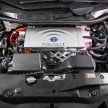
Announced at the 2015 Consumer Electronics Show, this initiative will see Toyota invite royalty-free use of approximately 5,680 fuel cell related patents held globally, including critical technologies developed for the production Toyota Mirai, revealed in November 2014.
The list includes approximately 1,970 patents related to fuel cell stacks, 290 associated with high-pressure hydrogen tanks, 3,350 related to fuel cell system software control and 70 patents related to hydrogen production and supply.


“By eliminating traditional corporate boundaries, we can speed the development of new technologies and move into the future of mobility more quickly, effectively and economically,” he added.
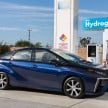
Toyota’s initiative builds on previous commitments, including financial support for the development of hydrogen fuelling infrastructure. In May 2014, it announced a $7.3 million (RM26,002,336) loan to FirstElement Fuels to support the operations and maintenance of 19 hydrogen fuelling stations in California. Toyota is also collaborating with Air Liquide to develop and supply a network of 12 hydrogen stations for New York, New Jersey, Massachusetts, Connecticut and Rhode Island.

The patents will be made available to automakers who will produce and sell fuel cell vehicles, as well as to fuel cell parts suppliers and energy companies who establish and operate fuelling stations. Companies working to develop and introduce fuel cell buses and industrial equipment, such as forklifts, are also covered. Requests from companies looking to adapt fuel cell tech outside of the transportation sector will be evaluated on a case by case basis.
Patents related to fuel cell vehicles will be available for royalty-free licenses until the end of 2020. Patents for hydrogen production and supply will remain open for an unlimited duration. As part of licensing agreements, Toyota will request (but not require) that other companies share their fuel cell-related patents with Toyota for similar royalty-free use. Not sure if major carmakers will take up the offer, but we’ll see.
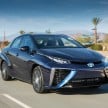
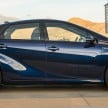
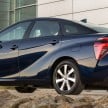
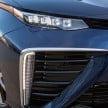
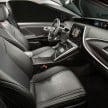
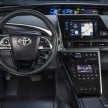
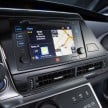
The Mirai – ‘future’ in Japanese – is powered by hydrogen, which is of course abundant. Using no gasoline, it emits only water vapour and “refuels” in roughly five minutes. The five-seater has an active range of up to 483 km, Toyota claims. Not just a concept car, the Mirai goes on sale in the USA this year for $57,500 (RM204,772). More on the Mirai here.













Looking to sell your car? Sell it with Carro.


 Savy Value (SV)
on
Savy Value (SV)
on 

 Ice Kacang
on
Ice Kacang
on  ScourgePrime (Member)
on
ScourgePrime (Member)
on  geez
on
geez
on  Fury
on
Fury
on  lcms
on
lcms
on  rolandchoo
on
rolandchoo
on  Low inflation
on
Low inflation
on  Ronaldo
on
Ronaldo
on  Chris (Member)
on
Chris (Member)
on  Same L0rr
on
Same L0rr
on  raychoo
on
raychoo
on  Observer
on
Observer
on  bangun harimau
on
bangun harimau
on  2 technologies
on
2 technologies
on  Jimmy
on
Jimmy
on  WaJib
on
WaJib
on  Nailinthecoffin
on
Nailinthecoffin
on  almighty lim guan eng
on
almighty lim guan eng
on  BLT_CLUB
on
BLT_CLUB
on  pot o smokey
on
pot o smokey
on  Crony
on
Crony
on  Sam Loo (ori1)
on
Sam Loo (ori1)
on  Green
on
Green
on  I AM NUTELLA
on
I AM NUTELLA
on  Robb
on
Robb
on  sudonano (Member)
on
sudonano (Member)
on  Nubis auto
on
Nubis auto
on  NA
on
NA
on  Kosumaledoko
on
Kosumaledoko
on  Sammy
on
Sammy
on  Proton Supporter
on
Proton Supporter
on  Amoi
on
Amoi
on  JB
on
JB
on  Sinki
on
Sinki
on  Takeo1070
on
Takeo1070
on 


AI-generated Summary ✨
Comments largely view Toyota's decision to share hydrogen fuel cell patents royalty-free until 2020 positively, appreciating it as a move toward greener technology and collaboration. Some express skepticism about proton or other local manufacturers' R&D efforts and challenge their ability to innovate independently. A few comments critique the design and practicality of hydrogen cars, while others raise concerns about infrastructure and cost efficiencies. Overall, there's a mix of support for technological sharing and cautious optimism about future developments.