
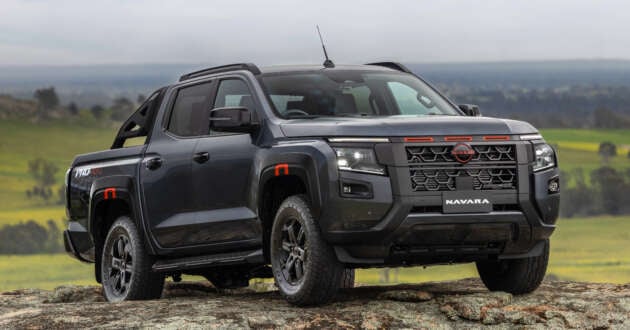
Here it is, the fourth-generation Nissan Navara. Internally designated the D27, the all-new pick-up truck replaces the third-generation (D23) Navara and will go on sale in Australia and New Zealand at the end of the first quarter of 2026.
If the Navara seems familiar, that’s because it is closely related to the third-generation Mitsubishi Triton that was first revealed back in July 2023. Platform sharing paired with individual styling isn’t new in the pick-up truck world, as exhibited by Isuzu D-Max/Mazda BT-50 as well as the Ford Ranger/Volkswagen Amarok.
Nissan has previously expressed plans to share some car platforms and jointly develop vehicles with Mitsubishi, and the Navara is a product of this strategic direction. Both companies are part of an alliance together with Renault, and before the Navara, Nissan recently revealed the new Rogue Plug-in Hybrid, which is essentially a Mitsubishi Outlander PHEV.
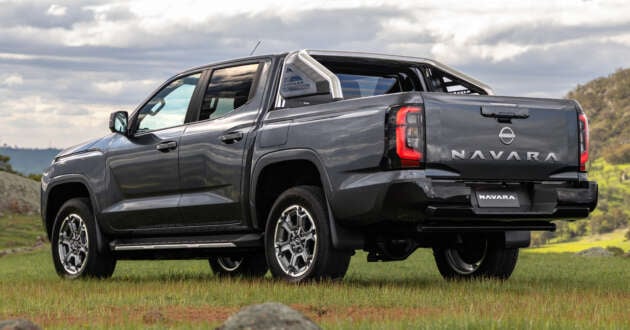
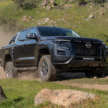
One glance at the Navara and you can immediately spot the similarities to the Triton. Carried over design cues include the squared-off wheel arches, distinctive window line kink near the rearmost pillars as well as the creases on the sides.
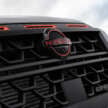
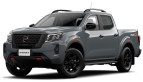
The Navara is differentiated from the Triton by its face, which features slimmer LED daytime running light strips that sit above more angular headlamp clusters. The grille is also of a different design with V-strut motifs for its insert and thick side surrounds that extend into the bottom corners of the front bumper.
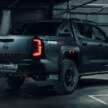
Unlike the Triton, the Navara – in Pro-4X guise pictured here – gets contrast-coloured slits between the DRLs, which are a tribute to the D21. The fog lamps also get larger surrounds and the lower intake is tucked away just under the main grille. At the rear, the taillights are the same shape as they are on the Triton but with a new light signature.
According to Nissan, over 90% of customers for the outgoing D23 Navara opted for a double cab body, so that’s the only one available for the new Navara when it goes on sale.
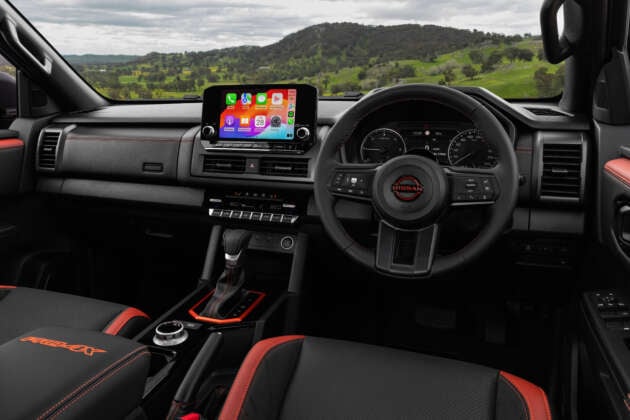
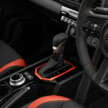
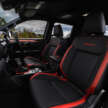
While the changes on the outside are noticeable, the Navara’s interior is a carbon copy of the Triton’s. The dashboard design as well as the layout of controls and displays are identical between both pick-up trucks, with the only discerning difference being the adoption of the Nissan logo.


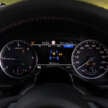
Available features mentioned include a seven-inch TFT instrument cluster display and nine-inch infotainment touchscreen (supports Android Auto and Apple CarPlay), with higher trims gaining a wireless charging pad. Telematics is through MyNissan Navara Connected Car Services, enabling functions such as remote pre-conditioning, stolen vehicle tracking, and remote door lock/unlock.
The Navara also comes with eight airbags and an ADAS suite, the latter including adaptive cruise control, traffic sign recognition, emergency lane assist, pedal misapplication prevention, lane departure warning, blind spot warning with lane change assist, front and rear cross traffic alert, high beam assist, a speed limiter, driving monitoring and autonomous emergency braking.
For the Australian and New Zealand markets, the Navara will only be offered with a 2.4 litre inline-four turbodiesel engine making 204 PS (201 hp or 150 kW) and 470 Nm of torque. The high-output version of Mitsubishi’s 4N16 is paired with a six-speed automatic transmission and an available four-wheel drive system.

Nissans says certain trim levels will get an ‘Easy 4WD’ system that automatically switches between two-wheel drive for highway cruising and four-wheel drive when extra traction is needed. An electronic rear differential lock is included standard to provide additional traction in demanding off-road scenarios.
For higher trims like the ST-X and Pro-4X, there’s a new ‘Super 4WD’ system that offers full-time high-range mode with an open centre differential. These variants also get a Torsen limited-slip differential and seven terrain modes (Normal, Eco, Gravel, Snow, Mud, Sand, and Rock) for drivers to cycle through. The entire Navara range offers a braked towing capacity of 3,500 kg.
Nissan also points out that the Navara’s suspension was tuned and tested by Australian-based Premcar specifically for Oceania markets. “Premcar invested countless man hours, driving the new Navara over eighteen thousand kilometres, testing across every conceivable surface and driving condition – from the Outback’s corrugated roads to urban stop-start traffic with heavy loads,” said Andrew Humberstone, managing director of Nissan Oceania.
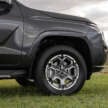
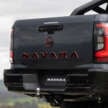
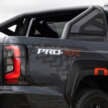
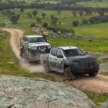
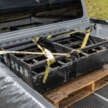
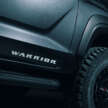
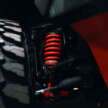
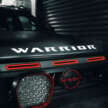
The collaboration with Premcar extends to the creation of the Warrior concept which elevates the off-road capability of the Pro-4X grade. The company has been making Warrior versions of the previous Navara and Patrol for some time, and the latest Navara is subject to the same treatment too.
The list of modification is extensive and includes things like a lifted and upgraded suspension system, larger wheels and tyres, an exterior protection package as well as more aggressive styling. All these serve to broaden the vehicle’s performance envelope, particularly when going off the tarmac.
Pricing and detailed specifications of the Navara for the Australian and New Zealand markets will be revealed by the first quarter of 2026. It isn’t mentioned in the local Australian and global releases that the Navara will make its way to Southeast Asian markets, particularly pick-up-crazy Thailand.
GALLERY: 2026 Nissan Navara



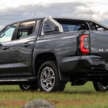
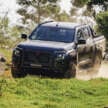
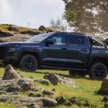
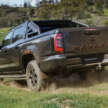








GALLERY: 2026 Nissan Navara Warrior concept



Looking to sell your car? Sell it with Carro.







Kinda sad the Navara no longer has coil spring rear suspension, one of previous gen’s unique selling points. Automatic also got downgraded from 7 to 6 speed. On the up side, Triton’s excellent Super Select 4WD system, modern interior and less laggy engine.
I think the Navara looks better than the Triton, with its headlights better integrated with the DRLs at the top and a grill that is not too squarish. It would be interesting how Tan Chong will price this against the Triton when they finally bring it in 2028*.
*TC haven’t said anything yet but we all know how tardy they are in launching new models, so 2028 is still too optimistic?