
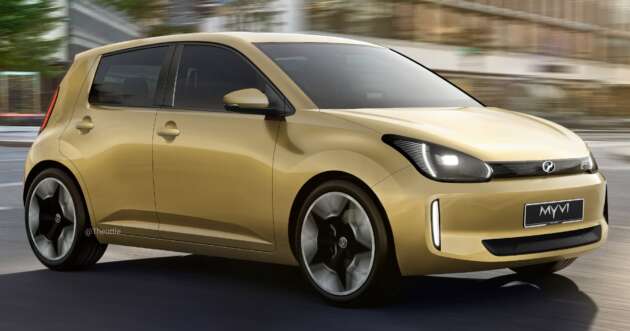
Perodua capped off a record year with the launch of not one, but two models – its first EV in the QV-E and its flagship model in the Traz. With those two out the door, the national carmaker will finally have time to focus on some of the models that have been crying out for attention.
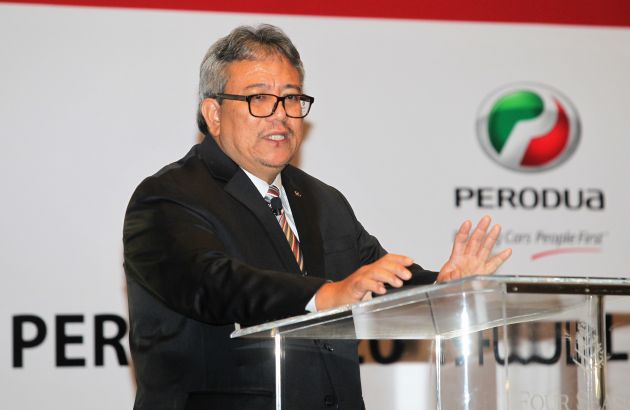
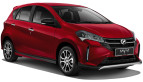
In a rare interview, Perodua president and CEO Zainal Abidin Ahmad sat down with Careta‘s Hezeri Samsuri to discuss a wide range of issues, and the topic of the Myvi was brought up. Introduced back in 2018, the third-generation model continues to be a strong seller and received a successful facelift in 2022, but there will inevitably be talk about a replacement at some point.
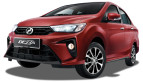
Still no information about when the fourth generation will surface, but according to Zainal, the next Myvi will continue to be a uniquely Malaysian product, such is its outsized importance to the company. “The new car will be different; still unique,” he said. “There are two models that we ask [Daihatsu] to have Malaysian uniqueness – the Myvi and the Bezza. This is something we have fought for for quite some time.”
The current Myvi is based on the second-gen model but features an in-house-designed body (Perodua calls this the “tophat”) and interior for a sportier look. This was done to bring the car more in line with Malaysian tastes, as the (now discontinued) Daihatsu Boon continued to cater to Japanese buyers with more sedate styling. The same is true for the Bezza, as Daihatsu does not offer a sedan for P2 to rebadge.
As yet, it’s unclear which platform Perodua will use for the new Myvi. It could very well retain the current car’s underpinnings, and the company has done a good job in upgrading the architecture to accept the latest technologies and powertrains. It’s also not unheard of, as the new Saga continues to use the same body structure as the last, and can trace its roots all the way back to the Savvy from 2005.
But updating the existing model still further will be a challenge, given that electrification is on the horizon. Asked about whether the new Myvi will offer a hybrid powertrain, Zainal simply said: “Insyaallah.”


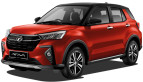
This leaves the door open for the possibility of Perodua plonking its own body on the Daihatsu New Global Architecture (DNGA), already used by the Ativa, Alza, Axia and Traz. Now that the Japanese firm’s safety scandal is well and truly behind it, the development of new models on this platform appears to have resumed, as evidenced by the launch of the new Daihatsu Move and the Traz last year.
The architecture has been built for electrification from the get-go, and if a Myvi hybrid does come to fruition, we expect it to utilise the Ativa Hybrid‘s Daihatsu-sourced e-Smart Hybrid system. This uses the electric motor – a 106 PS/170 Nm unit in the Ativa Hybrid’s case – with a 1.2 litre naturally-aspirated three-cylinder engine used as a generator.
Perodua’s joint venture partner rebadges the Myvi as the Sirion for the Indonesian market, and Zainal said this is set to continue with the new model. However, his vague wording suggests that this “reverse” collaboration – Daihatsu rebadging a Perodua instead of the other way around – could be expanded to more markets, and even involve another brand.
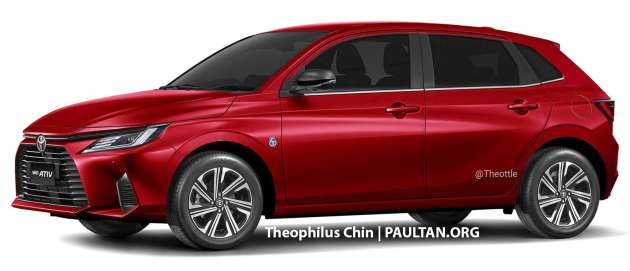
Being in the competitive B-segment hatch market, the next Myvi could plug a gaping hole in Toyota’s ASEAN lineup. The company has inexplicably chosen not to create DNGA-based Yaris out of the latest Vios (perhaps due to the aforementioned safety scandal), instead keeping the old model on sale.
There is, of course, a Yaris for Europe and Japan, but this is built on the more expensive Toyota New Global Architecture (TNGA) and is smaller on the inside, making it incompatible with regional tastes. Toyota rebadging the Myvi as the new Yaris (not for Malaysia, perhaps, but for countries like Thailand and Indonesia) would thus make at least a modicum of sense – and it would be a huge coup for Perodua.
The other, much harder possibility would be to base the Myvi on the QV-E, making the car a truly homegrown Perodua for the first time. Developed in partnership with Magna Steyr, the platform was touted as being suited not just for EVs but also range extenders and hybrids. However, Zainal poured cold water on this suggestion, saying that the collaboration with Daihatsu precludes any development of a self-developed pure combustion-engined model – an ICE variant is surely a requirement for a new Myvi.
Looking to sell your car? Sell it with Carro.







Still no car manufacturer takes on Theophilus’ design and produce them? Gotta try harder.
Nowadays use AI lagi lawa
the esthetics design only for kayangan people
What’s the point of all the Theo fake renders… Nobody wants to see them… Put the picture of the interview as the header picture better.
Waste of company funds.